Chickens, compost and a vegie garden at Horsley Kids
July 10th, 2026
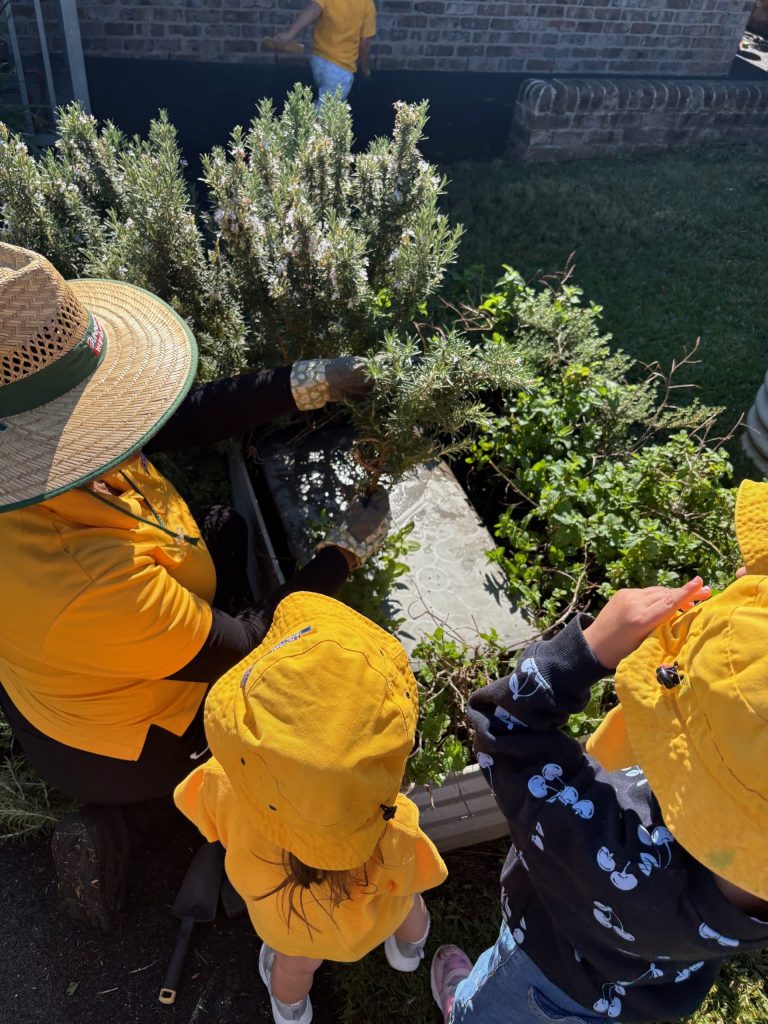
Some of the most important learning at Horsley Kids happens outside, in gumboots. Our early learning centre in Horsley Park has pet chickens, compost bins and a vegetable garden that the children look after themselves, with a little help from their educators. Here’s what a scrap bucket and a handful of hens actually teach.
The chickens come first
Every morning, someone needs to check on the chickens. Food, water, a quick head count. It’s a real job with real consequences, and the children take it seriously. Caring for an animal that depends on you builds responsibility in a way no worksheet can. It also builds gentleness. Watch a boisterous four year old slow right down to hand feed a hen and you’ll see what we mean.
The chickens earn their keep too. They eat kitchen scraps, turn over the garden beds and give the children a daily lesson in where eggs actually come from.
Compost turns rubbish into a science lesson
After morning tea, the scraps get sorted. Apple cores and vegetable peels go to the compost or the chickens, paper goes to recycling, and the children make those calls themselves. Over the weeks they watch banana peels break down into dark, crumbly soil, and that transformation raises exactly the kind of questions young scientists should be asking. Where did it go? Why is it warm in the middle? Why do the worms like it here?
Composting at home works the same way, and it’s a habit families can borrow from us. The NSW Environment Protection Authority has practical guidance on reducing food waste at home if you’d like to start your own bin.
The vegie garden closes the loop
The compost feeds the garden beds, our native stingless bees pollinate the flowers, and the children plant, water and harvest what grows. Then the best part happens. The harvest goes to our kitchen, where our chef works it into meals planned by a certified dietician. Children who grew the beans are remarkably keen to eat the beans. You can read more about food at the centre on our health and nutrition page.
So one small yard holds an entire ecosystem. Scraps become compost, compost becomes vegetables, vegetables become lunch, and the peelings start the cycle again. Children don’t need this explained. They live it every week, and by the time they head off to school it’s simply how they understand food.
Why sustainability belongs in early learning
Under the Early Years Learning Framework, children are supported to become socially responsible and to show respect for the environment. That outcome can sound abstract on paper. In practice, at our centre, it’s a child remembering the chickens need water on a hot day. Environmental responsibility is also embedded in the National Quality Standard that all Australian services are assessed against, and it’s an area where our program has always been hands on rather than theoretical. It sits naturally alongside our Reggio Emilia inspired approach, where the environment is a teacher in its own right.
Questions families ask about our garden program
Do all age groups take part in the garden and chicken care?
Yes, in age appropriate ways. Toddlers might water seedlings and collect leaves for the compost, while our preschool children take on jobs like feeding the chickens and harvesting vegetables, always alongside educators.
Is it hygienic for children to be around chickens and compost?
We follow strict hygiene procedures. Handwashing happens after every garden and animal activity, and educators supervise all contact with the chickens and compost. These routines are part of the learning too.
Do the children really eat what they grow?
They do. Harvested produce goes to our on site kitchen and appears in meals planned by a certified dietician and prepared fresh by our chef. Children are noticeably more willing to try vegetables they grew themselves.
Can families get involved?
Families are always welcome to chat with educators about what’s growing, and children love giving garden tours at pick up. If you’d like ideas for composting or growing vegetables at home, our educators are happy to share what works.
See the garden for yourself
Meet the chickens, peek in the compost and walk through our learning spaces.